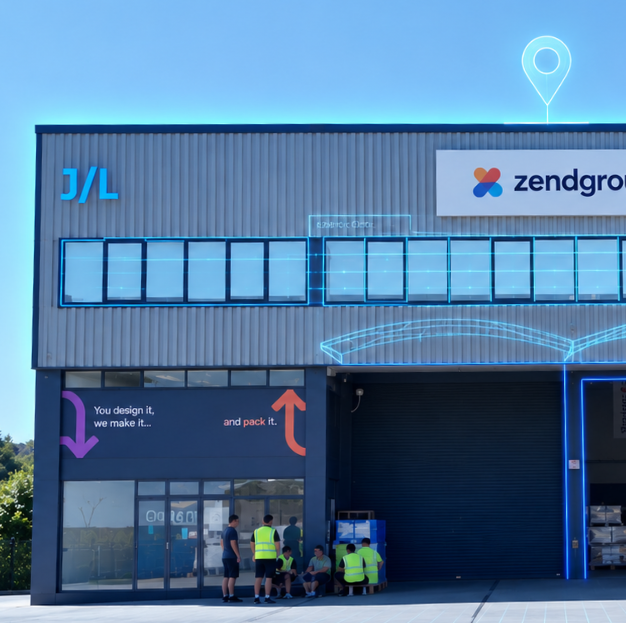
Rising warehouse rents and energy costs are squeezing eCommerce margins while delivery expectations tighten. Running your own warehouse locks cash into fixed overheads. A 3PL turns those fixed costs into a variable, per-order cost that scales with demand. Use the checklist to judge whether it is time to switch.
With warehouse rents now around £11 per sq ft for prime UK industrial space and business energy prices still 75% above pre-2021 levels, many eCommerce brands are struggling to keep operational costs under control. Partnering with a premium third-party logistics (3PL) provider such as Zendbox replaces fixed warehouse overheads with a flexible, data-driven fulfilment model that scales with demand and safeguards both margins and customer experience
Rising space and energy costs are eating into margins, while delivery expectations are compressing fulfilment lead times. The brands staying profitable are those shifting from fixed leases and static teams to variable, performance-driven 3PL partnerships.
Running a 10,000 sq ft warehouse at £11 per sq ft equates to £110,000 a year in rent before energy, insurance, or staffing; a fixed overhead that typically exceeds £250,000 annually. That’s capital trapped in overhead instead of fuelling brand growth. Each month those funds remain locked in fixed infrastructure is cash that could fuel marketing, product development, or faster international growth. By contrast, outsourcing fulfilment to a 3PL converts those fixed costs into a variable, performance-based expense, improving liquidity and protecting margins as order volumes fluctuate.
Ask yourself:
Are warehouse and energy costs rising faster than order growth?
If rent, energy, and staffing exceed 15 % of order revenue, you’re carrying excess fixed cost.
Do peak seasons strain capacity or service?
Zendbox flexes space and labour on demand, no new leases or short-term hires.
Are internal teams overloaded with fulfilment admin?
Outsourcing pick/pack, returns, and carrier management lets teams refocus on growth.
Are delivery times slipping or too expensive?
Zendbox’s 9 pm cut-off and shipping algorithm ensure same-day dispatch at the lowest achievable carrier cost.
Do you lack live visibility of inventory and performance?
Zendportal consolidates real-time stock, order tracking, and KPIs into one view.
Zendbox delivers end-to-end fulfilment: receiving, storage, pick-pack, dispatch, and return from a premium UK facility.
With no leases, no energy risk, and on-demand scalability, brands convert fixed overheads into agile, pay-per-order operations.
A fast-growing DTC wellness brand cut operational overhead by 32 % within 3 months, lifted pick accuracy to 99.8 %, and achieved 98.6% next-day delivery after moving from a leased warehouse to Zendbox.
Tick three or more? It’s time to consider a flexible 3PL model.
Brands that transition to a data-driven 3PL typically see:
That’s the reliability and visibility needed to scale profitably, even as costs and expectations rise.
1. How does 3PL pricing compare with in-house fulfilment?
3PL pricing is variable, brands pay per order fulfilled, removing fixed rent, utilities, and staffing costs. This usually improves cashflow stability for scaling eCommerce businesses.
2. Can Zendbox handle seasonal volume peaks?
Yes. Zendbox scales labour and storage dynamically to maintain performance during demand surges like BFCM.
3. How quickly can we onboard to Zendbox?
Onboarding typically completes in 2–4 weeks, including integrations, stock transfer, and live test dispatches.
4. Will we lose visibility of our orders?
No, Zendportal gives real-time order, stock, and carrier performance data.
5. Can Zendbox fulfil international orders?
Yes, Zendbox supports shipping to 72+ countries with carrier auto-selection.
6. How can Zendbox improve customer satisfaction?
Reliable same-day dispatch and next-day delivery to boost repeat purchases.
Speak to an expert today to discover how Zendbox can lower your fixed costs, improve fulfilment speed, and future-proof your eCommerce growth.
We maximised our inventory performance to reduce stock holding costs and overall billing with the help of Zendbox.

Warehouse and energy costs have climbed sharply, according to sources cited in the article.
Ask these questions to judge whether in-house fulfilment still makes sense.
Are rent, energy and staff rising faster than orders? Above 15% of order revenue suggests excess fixed cost.
Do seasonal peaks cause missed SLAs or cost spikes that a flexible 3PL could absorb?
Is your team overloaded with fulfilment admin instead of working on growth?
Are delivery times slipping, and do you lack live visibility of stock and performance?