October 6, 2026

Every Q4 sees the same content around Black Friday/Cyber Monday (BFCM): marketing playbooks, vendor-sponsored research, and trend reports that promise to show brands what to expect during the peak season. (Spoiler: people will buy stuff on Black Friday.)
The problem is all this tells leaders very little about their specific situation. Generative engine optimisation (GEO) might be a great tactic for BFCM; nearly three-quarters of consumers are willing to use AI to compare products during peak season. But if you just Googled “the f**k is GEO?” GEO might not be your best bet this time around.
That’s why we created this guide: to help D2C founders identify their best plays for BFCM based on their industry, products, revenue, and existing marketing system.
To do that, we brought together James Kouhry (CEO of Zendbox and serial founder), Peter Fairhurst (Head of Sales at Zendbox), and Alice Pickford (Customer Experience Manager at Zendbox) to analyse the latest data and answer the most common questions about BFCM conversion strategies.

As we recently explored, consumers are highly sceptical about BFCM discounts today. Research from Which? shows that many brands create artificial discounts or offer better deals at other times of the year. But shoppers can now easily find and compare prices from different points in time; leaders who want to win sales this year will need to offer genuine value during BFCM.
The challenge is calibrating those discounts: too small, and you risk losing sales to rivals offering better savings; too big, and your margins suffer. BCG has found that consumers consider a good deal to be a minimum 30% discount. Yet several factors complicate things.
The first is industry and product category: The Retail Insight Network has shown that consumers look for absolute savings when considering electrical and technology products, but beauty consumers tend to look for relative discounts.
That split basically boils down to: customers want to save a particular amount on certain product types (TVs, Games Consoles) because they have a strong anchor for what those products should cost. For others (protein powders, makeup kits) they look at comparable products to discern whether the deal is good enough.
“Leaders need to decide where they sit within this dichotomy,” Alice says. “Do your customers look at discounts in isolation, or are they likely to check a few different sites (or consult their little AI underlings) to see how good your discounts really are?”
A lot of this comes down to competitive positioning. Leaders should take an honest look at your competitive positioning: how many other brands can offer fundamentally equivalent products to yours? Plenty of D2C brands are in a category of one, offering something genuinely unique. In such cases, leaders should take 30% as their guideline and offer discounts as close to that level as possible without wiping out their margins.
But for brands that sit within categories like beauty (to which we would add wellness and health more broadly), discounts should be price-matched to comparable products. “If you can identify the three or four products your customers will be comparing deals with,” Peter says, “you can anchor your own discounts and potentially undercut them, if you can afford to.”
Subscriptions and repeat-purchases can also change the BFCM economic equation. “If you sell at a massive discount but hook consumers,” James says, “smaller margins could be more than worthwhile.”
The question is whether you’re likely to set the benchmark too low and actually make your standard subscription price appear excessive. “If Black Friday is a pipeline for subscriptions,” he continues, “you might want to allocate some of your peak season budget into follow-up marketing to help retain subscribers beyond November and December.”
Finally, average cart size plays a crucial role in calibrating discounts. How many products does your typical customer buy in a single purchase? This influences the unit economics of BFCM discounts, because consumers may look at the overall saving rather than any individual deal.
“If your customers routinely buy five items,” says Peter, “smaller, store-wide discounts might have a greater impact than targeting discounts on big ticket items.” BCG has shown that “X off everything” sales are most popular with customers anyway; if you can offer a cumulative saving, a slightly lower per-item discount could drive conversions and improve your margins.
That said, BFCM has begun to skew towards fewer big ticket purchases. In 2025, UK consumers made 8% fewer purchases but spent 12% more per item. Brands planning to bet on larger carts based on widespread but smaller discounts should be aware that consumers appear to see BFCM as an opportunity to take the edge off their biggest holiday expenses.
The timeline for BFCM sales has expanded to an almost farcical extent. Over two-thirds of shoppers say they started seeing deals by the end of September, and fewer than one in five plan to wait until Black Friday to start shopping.
The question is how brands should approach that timeline: save the biggest discounts for the actual BFCM weekend or spread deals across a wider timeframe and risk diluting the excitement around the period.
“It’s become standard practice to build demand in the lead up to Black Friday,” Peter says. “Whether that means higher ad spend or just increasing your social presence, most brands are already fighting hard to get in front of consumers by this point in the year.”
How you approach that comes down to your existing marketing strategy. “Some brands already run sales at six other times in the year,” Alice explains. “There’s a risk of reducing the impact of Black Friday, especially if you launch the sale too early.”
Brands should see discounts as a commodity: the more frequent and easily accessible, the more their value diminishes. That also points to a more sophisticated approach that could help inject some excitement back into the peak season.
“One tactic would be to advertise your Black Friday discounts ahead of time,” says James. “You could almost offer the equivalent of ‘financial futures’: commit to make a purchase during Black Friday and you’ll lock in this price.”
The risk there is that competitors can undercut your prices. Brands could combat that by staggering access, giving existing subscribers or loyal customers first-pass on their sales in the days or weeks leading up to Black Friday.
“Black Friday doesn't really feel exciting anymore,” Alice says. “44% of consumers don’t look forward to seasonal sales as much as they used to. So creating exclusivity, through limited access to deals or even using Black Friday to launch new products, could add that element of fun back to things.”
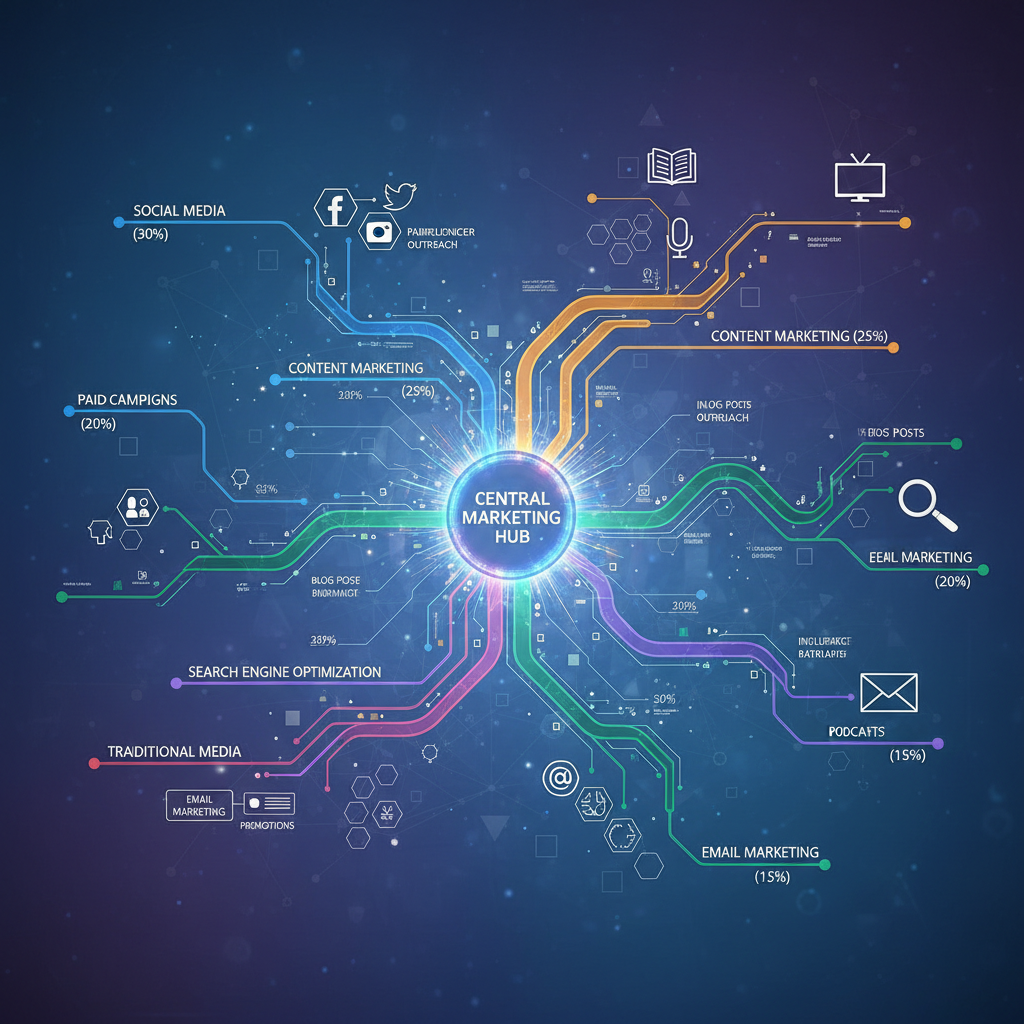
Given that BFCM often accounts for a large portion of D2C brands’ Q4 sales, marketing budgets tend to be nice and big. But allocating spend strategically can be tricky; plenty of leaders end up throwing spaghetti at the wall and seeing what sticks.
“Companies with strong brand recognition or an established customer base can probably afford to hold off on extensive demand generation campaigns,” James says. “If you’re already making hundreds of daily sales, you might be best focusing time and effort during October and early November on customer nurture that can be cashed in during BFCM.”
But less-established brands should see October and November as one big promotional push. “It culminates on Black Friday,” Peter says, “but the whole period is an opportunity to generate demand and drive more sales. Customers are already researching purchases in October, so your marketing should move up a gear from then.”
Advertising is an important part of that push, but it’s important to avoid indiscriminate spending. Some data suggests median ROAS increases 26% from September to Black Friday, but the attribution models used to generate that data are not always totally reliable.
When ads are part of a larger marketing funnel, calculating the “true” ROI requires insight into the role those ads play in capturing and nurturing prospective buyers; without that information, all we can really say is “people click on ads a lot during peak season, and lots of people buy things on Black Friday.”
The best approach depends on your product category and average cost. “If your products are low- or medium-priced, cold ads can run throughout the period and just climax during BFCM,” says Alice. “But if you’re at a higher price point, focus on demand gen in the run up, then switch to remarketing to tip customers over the edge when the discounts hit.”
Another strategy is to capitalise on heightened customer activity throughout the period with mini-sales. “Once you have a decent warm email list, you can start dropping time-sensitive sales throughout early November,” James says. “Not necessarily at your BFCM discount rates, but enough to persuade a buyer who’s nearly made up their mind to take the plunge.”
Most D2C leaders are across the standard eCommerce CRO playbook, but BFCM requires a different set of tactics. Consumers are actively searching for deals; many have been researching their purchases for months. Scarcity signals and free returns will only take you so far.
“Black Friday is already kind of stressful,” says Peter. “Shoppers don’t want to feel like they’re being squeezed for all they’re worth. Too many low stock messages or pushy pop-ups could easily just annoy them.”
Instead, BFCM CRO is about clarifying, framing, and maximising the value of your deals. “If you’re offering a genuinely good discount, make that super clear,” James says. “You could add a graphic to your PDPs with a timeline of product prices, showing that the deal on offer really is the best price customers will get.”
In the same spirit, reducing surprises during the checkout process will help improve conversions. “Brands could consider dropping delivery fees for Black Friday sales,” James says. “We know that 50% of customers back out of purchases due to unexpected costs. Advertising the true cost gives people confidence in the deal you’re offering.”
Customer intent is also important for calibrating your CRO strategy. “What are your Black Friday sales primarily helping customers with?” Alice asks. “Are people getting their Christmas shopping done earlier? Or is this a chance to treat themselves when prices are low?”
Clarity here helps frame your products during the sale. “Little messages like ‘Most Gifted 2025’ can nudge people over the line,” Peter says. “If you know your products fit a particular consumer goal, making it explicit often has a bigger impact than standard behavioural bias tricks.”
That’s the ultimate takeaway all three of our team emphasise: Black Friday is no longer about chaotic scenes in shops and desperate spending. Customers are careful, deliberate, and well-informed. Your strategy needs to respect that and create the best possible value based on your specific audience, category, and market position.





.svg)