September 14, 2026
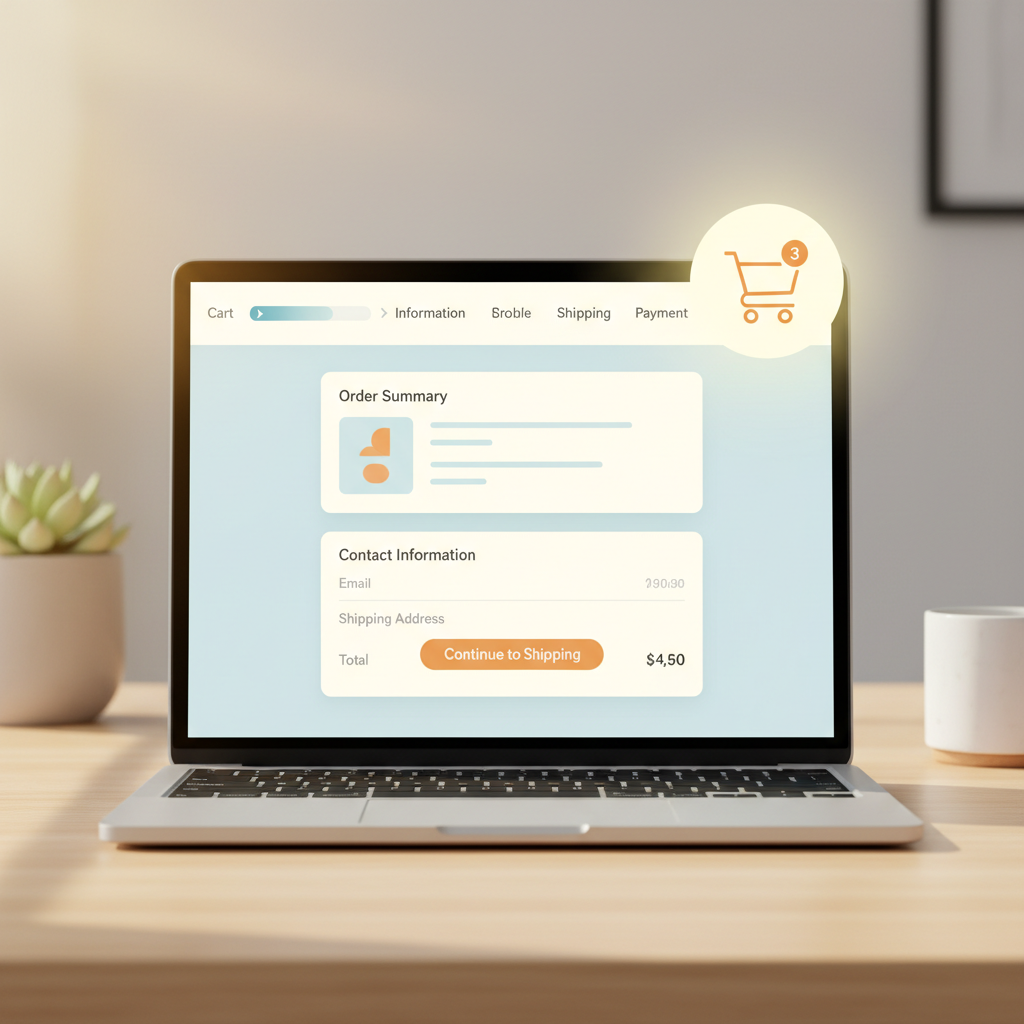
Most D2C founders won’t have time to read this article. You already spend a part-time job’s worth of hours just running social media, and that’s before all the admin and outreach and actual product development. But before you switch back to Canva or Google Search Console, ask yourself this:
What if all this demand generation could go further with a few simple changes to your checkout experience?
Over 70% of shopping carts are abandoned, according to a meta-analysis of 50 studies from Baymard. Now, that does not mean you could magically triple your total sales. The same analysis found that 42% of basket abandoners were really just browsing; presumably they just really enjoy putting stuff into digital baskets.
What it does mean is many customers could be feasibly nudged over the line by the right adjustments. And while most conversion rate optimisation (CRO) advice has all the authority of a Tarot reading (”Change Red to Orange and Double Your Conversion Rate”) there are evidence-based steps most D2C brands still haven’t taken that really could have a significant impact on your bottom line.
These steps mostly don’t look a whole lot like traditional CRO. There’s no manic experimentation; there’s no need for forty different A/B tests. They are simply best practices, mostly related to the boring logistical stuff that tends to put founders to sleep, and they can generally be actioned without even missing a single deadline on your Instagram content calendar.
We spoke with James Kouhry (CEO of Zendbox and serial founder) to learn what he recommends time-poor D2C founders change to quickly boost their conversions:
D2C product description pages (PDPs) typically advertise the price of the product, but often neglect to factor in delivery costs. That can take customers by surprise when they reach the checkout; many studies have found this has a material impact on sales.
One study found that nearly 50% say they’ve backed out of a purchase due to unexpected costs. Baymard puts it at 40%, with an earlier study from their team suggesting 21% of customers abandoned their basket explicitly because they couldn’t calculate the total order cost up-front.
While founders experience the product costs (development and manufacturing) and delivery costs (warehousing and fulfilment) as separate, customers just see the transaction on their bank statement. So the “trust cost” of a product is really whatever it costs to actually get it to your front door.
James says this opaque pricing is often just the default of the checkout system. “A lot of eCommerce templates don’t factor shipping costs into the advertised price,” he says. “But customers don’t know or think about that. They often feel like the brand is trying to lure them to the checkout with a lower price.”
The fix is usually easy and doesn’t require a dev. All it really takes is for founders to think through the actual experience they’re giving customers. “Imagine getting to the checkout at Tesco and discovering your meal deal actually costs £7,” he says. “You might be willing to pay the price, but plenty of us would refuse on principle.”
Founders might fear factoring delivery costs into their top-line price makes them look more expensive, but James encourages them to trust customers’ intelligence. Customers generally expect an additional fee; many put the product into their basket just to see how much the real price will be.
His advice is to really hammer home that this is the full price customers will pay, partly because doing so can be persuasive in-itself. “It’s not just about giving customers clarity,” James says. “Banging the drum a big deal about the price being what you’ll actually pay signals that it must be great value. Almost like, ‘this is such a steal we’re having to reassure people this is the real price.’”
D2C founders often struggle calibrating their returns policy: unconditional returns often lead to heavy costs that erode your bottom line, yet making returns harder or costly obviously makes customers feel making a purchase is risky.
The research backs all of this up: one study found that 70% of consumers may stop shopping with you based on poor returns experience, and 85% of consumers say free returns are important when deciding where to shop. But what is most important is not the specifics of the returns policies; like pricing, it is about transparency.
A clear returns policy is now the #1 delivery priority for UK shoppers, ranked above cost and even delivery speed. Over half of all customers in one sample (57%) say it's the most influential factor when deciding whether to buy.
James says the single biggest win for D2C founders is not to change their returns policy, but to make it more immediately visible and clear. Every second a customer spends searching for the return policy is extra purchase friction. If they can’t find it immediately, their skepticism about the brand likely builds.
“Don’t make people search for Ts and Cs or read small print,” he says. “Advertise the returns policy in clear, direct language so that even people who don’t care will see it.”
That said, James also says that brands could easily extend their returns window without having to change much operationally. A large meta-analysis found that more lenient returns policies had a stronger effect on purchases than returns volume. Sales increase more than returns, making it a net gain for businesses. In fact, extending the window during which returns are allowed actually reduces returns.

People don’t tend to be passionate about payment options; nobody is wandering around town singing about how much they love PayPal. But plenty of people still have a preference about payment options, and 62% of shoppers say they will immediately abandon a purchase if their preferred method is unavailable.
From a CRO perspective, that’s often just down to added friction. A customer might only have their account details saved on PayPal; if you demand that they use another method, they have to open their banking app and type all these numbers out. Then maybe they mistype them, which means they’ll have to do the whole thing again.
Adding extra payment methods is therefore just about making it easier and faster for customers to complete a purchase. Yet just 45% of businesses currently recognise payment options as a key driver of cart abandonment. “Founders often think it’s a lot harder than it is to add payment methods,” James says. “Once they realise, there’s really no reason not to offer more options.”
If you're on Shopify, Stripe, or a similar hosted setup, adding options like Apple Pay, Google Pay, PayPal, or a buy-now-pay-later provider (Klarna, Afterpay, Affirm) is often a matter of toggling a setting or installing an app, then completing the provider's onboarding.
The biggest weakness of eCommerce is the lack of instant gratification. People often say their favourite thing about shopping IRL is that they can walk out of the store with their purchase. Yet with online purchases, the only thing you get immediately is the notification from your bank that the money has left your account.
Closing that gap between the purchase and the package arriving makes the purchase feel better. One study found that 20% of shoppers were more likely to complete their purchase if faster delivery was available. However, this isn’t just about making fulfilment faster; it’s about subverting expectations.
“Customers often expect next-day delivery,” James says. “But they generally expect the cut off to be relatively early in the day.” There’s an almost inverse relationship here between shopping behaviour and fulfilment options.
Most people are more likely to browse eCommerce stores with their feet up on the sofa in the evening, yet that is exactly when most brands can’t offer them the fulfilment speed they want. James says he’s found that fixing that disconnect is a massive conversion driver.
“We built a system called MagicShip that basically lets brands offer next-day delivery until 9pm,” he explains. “We use a range of couriers and a smart system to route orders so that we can guarantee delivery far later than most brands.” But the kicker is James says making that shift is really quite straightforward.
“Switching 3PLs often seems like a nightmare and founders often stick with their current partner for the sake of simplicity,” he says. “Yet we’ve got an onboarding system that requires very little from founders and is engineered to avoid any disruption to existing operations."
As a result, he says plenty of founders could be up-and-running in time for Black Friday.
Want to offer later next-day deliveries in time for peak season?
__
No. Baymard's meta-analysis of 50 studies puts cart abandonment above 70%, but 42% of those shoppers were only browsing with no intention to buy. The realistic opportunity is the smaller group that meant to purchase and stalled at the checkout. Evidence-based fixes recover some of those customers; they do not convert everyone.
Yes. Unexpected costs are one of the most common reasons people back out: Baymard attributes around 40% of abandonment to it, and an earlier study from its team found 21% left because they could not work out the total up front.
Customers see one figure on their bank statement, not your internal split between product and fulfilment, so advertise the full price they will actually pay.
Usually not. The bigger win is making the policy easy to find and writing it in plain language, because every second a customer spends hunting for it adds friction and doubt.
A clear returns policy now ranks as the top delivery priority for UK shoppers, above both cost and delivery speed, with 57% of one sample calling it the most influential factor in whether they buy. If you do want to go further, extending the returns window tends to lift sales more than it lifts returns, and can even reduce returns overall.
Offer the ones your customers already have set up: Apple Pay, Google Pay, PayPal, and a buy-now-pay-later option such as Klarna, Afterpay, or Affirm. 62% of shoppers say they will abandon a purchase when their preferred method is missing, yet fewer than half of businesses treat payment choice as a driver of abandonment. On Shopify, Stripe, or a similar hosted setup, adding a method is often a toggle or an app install followed by the provider's onboarding.
Later next-day cut-offs. Most people browse in the evening with their feet up, which is exactly when the usual early cut-off for next-day delivery has already passed. Closing that gap aligns fulfilment with customers’ real browsing habits, and around 20% say faster delivery makes them more likely to complete a purchase. The point is less about raw speed and more about making gratification more immediate.
No. These are clarity and logistics fixes, not experiments. Most can be actioned from settings you already have, or through a 3PL that onboards without disrupting your current operations, so none of it requires significant time, effort, or investment.





.svg)