The F-It, Why Not? Era of eCommerce
June 15, 2026
The eCommerce subscription economy has entered a new phase we might call the "F-it, why not?" era.
For the past decade, subscriptions have slowly gone from novelty to norm. The idea of receiving a monthly box of curated wines or eco-friendly kitchen roll once offered consumers a fantasy of their future selves. All it took was a simple recurring payment, and their lives would be filled with new experiences, healthier habits, and more virtuous purchasing decisions.
Never mind that it was the same principle that powered your grandparents' milk round; a recurring order from an online retailer offering you special prices and extra treats felt new. During the pandemic, over half (55%) of consumers signed up for a subscription box simply "to treat themselves".

That period of novelty-driven growth is over. UK consumers now manage an average of 7.9 subscriptions and spend roughly £135 each month on them. We say "manage" because that's how it feels: consumers now drop more than £688 million on unused subscriptions, and over one-quarter of people have taken a subscription out by accident.
It's hard to feel excited about something you're doing unintentionally and at great personal cost.
Behind that shift is a change in how consumers view eCommerce subscriptions. The path to subscription used to follow a funnel. Awareness led to interest. A sample prompted a purchase. A satisfied customer turned into a subscriber. But now, the easiest path to a sample or first purchase is the subscription.
Brands offer subscriber discounts and gifts. They make it easy to pause, cancel, and resubscribe. Subscriptions are typically the best-value version of the product and carry virtually no risk for consumers.
This makes three-quarters of consumers more likely to subscribe and helps explain why subscriptions kept growing even after the pandemic-era boom. But you end up with a lot of toe-dippers who look like die-hards on paper.
The result is inevitable: crazy-high churn (20%) and diminishing brand loyalty. Plenty of people subscribe just to get the discount. They can cancel anytime; why would they choose to pay the full price? They see the subscription options, check the "Cancel Anytime" policy, and subscribe with almost zero intention of repurchasing.
Hence the "F-It, Why Not?" era.
This is not a problem with consumer behaviour. We all want the lowest price possible. But more importantly, brands have hardly fostered an environment of mutual respect and fairness.
The fact you know instinctively what a "Subscription Trap" is tells us everything: these deceptive tactics, designed to make cancelling worse than realising your order's being fulfilled by Evri, cost UK consumers over £1.5 billion each year.
Not every brand tries to make it actively difficult for consumers to cancel orders. Many now accept the overwhelming evidence that making it easy to cancel a subscription drives more sales; one survey found that adding a "Pause" option is the single most effective subscription retention strategy.
Yet most tacitly endorse the underlying assumption that inertia is good. Subscriptions auto-renew; if the consumer keeps forgetting, that's more sales for your brand. Why not try to maximise subscribers if a portion of them will forget and keep re-ordering?
The problem is those tactics don't wash anymore.

The "F-It, Why Not?" era makes inertia-based tactics moot. When consumers take out subscriptions with the active intention of cancelling, banking on forgetfulness or inaction becomes a business oversight.
Some subscribers set a calendar reminder to cancel before auto-renewal. Some immediately cancel to save themselves the admin. And even those that do accidentally miss the cancellation window are far more likely to cancel afterwards.
Brands that treat subscriptions the same way they did five years ago will see churn grow fast. The challenge is no longer just to make deliveries reliable and maintain quality standards. You need to convert a whole swathe of subscribers who really only expected to make one order and enjoy their free gift and discount.
To figure out how that's done, let's look at the research on why inertia tactics never worked in the first place.
Two studies explored the impact of different subscription renewals on revenue and found the same thing: inertia-based systems drove short-term boost in profit, but led to long-term losses.
Comparing auto-renewal and auto-cancel options, researchers at Stanford (no big deal) found that around half of the auto-renewal group paid for a subscription they didn't want. But that "gain" in subscribers had a measurable long-term cost.
People within the auto-renewal group started to pre-empt their own inertia. Many avoided the subscription altogether. Whereas the auto-cancel people only subscribed if they actually read the magazine; they built a habit and relationship with the product. Within a year the revenue generated from both groups was equal; within two, the magazine only attracted subscribers with the auto-cancel option.

A similar study found that annual gym subscriptions generated less revenue than monthly renewals. You would think monthly renewals would drive more churn; there are just more opportunities to cancel. But annual contracts actually decreased the likelihood of consumers keeping the subscription after a year by 17%.
Once that one big payment goes through, the member doesn't feel the financial sting. It probably feels far less painful than a spin class or a heavy weight session. Whereas members with monthly payments feel the pain regularly; they have a more immediate motivator to get them through the door.
Both studies show that inertia just doesn't drive lasting, profitable subscription services. To build a sustainable model and avoid constant churn, you need to help consumers build actual habits.
The standard subscription retention playbook looks suspiciously like generic customer retention: improve the customer experience, promote the product's value, simplify orders, pausing, and cancelation. But subscriptions aren't just repeat purchases; they're a commitment to a future self.
"Fundamentally, a successful subscription business's economic value is a function of the strength of the habits they create" says Nir Eyal. The goal is to build and reinforce an identity and lifestyle which your product supports.
Think about workout supplements. A one-off purchase says "I'm going to the gym", whereas an ongoing subscription says "I'm going to keep going to the gym." That's an important distinction and it shows how brands can turn "F-It, Why Not?" subscribers into actual long-term customers.
The trick is to use the psychology of habit formation to help consumers turn your product into a routine that supports their goals:
If you're selling toothpaste subscriptions today, you don't really need to educate the audience about when to use your product. But it's not dentists you have to thank; it's an advertising copywriter called Claude Hopkins.
The "once in the morning, once in the evening" routine was created and popularised by a campaign promoting Pepsodent in the early 20th Century. And it highlights something essential about habit formation: you need a clear, repeatable trigger that prompts the behaviour.
Most of us don't think about brushing our teeth. We have the trigger (morning routine, bedtime routine) and toothpaste is just an inherent part of the subsequent process.
That's the ideal end-point your eCommerce subscription is going for, and there are several ways to build those triggers:
Humans require a reward system to build and maintain habits. Biologically, it's the chemical rush you get from working out, eating healthily, or completing a good piece of work. Socially, it's the pat on the back you get when people see you do those things.
Subscription services need to replicate that reward system to ensure consumers habituate product use. Each reorder should feel like an achievement, like the consumer is being rewarded for keeping their positive habit up. But that's not the experience most companies deliver.
There are two factors eCommerce brands need to address here:
The first is a lack of variable reward. eCommerce brands almost always frontload their subscription offer with freebies. Potential subscribers might be nudged over the edge by the promise of a free sports bottle or branded t-shirt, but that excitement wears off fast.
The first delivery delivers a dopamine rush that can't be replicated. Subsequent orders feel less like rewards and more like repayments for that initial high. Many brands offer a discount on the first order, too. So on month three, subscribers get fewer items for more money.
Is that really how we like our habits to be rewarded?
"A key reason customers churn out of subscription services is declining variability," Nir Eyal argues. Brands should stop frontloading and build variable reward into their subscriptions. Every order can include an extra gift, even if it's small, to create an anticipation loop; consumers know their next purchase will deliver something new.
Electrolyte brand Cadence actually outlines a three-month "free gift" offer that both rewards ongoing subscription and gives subscribers novelty:
The second element is social reward. Plenty of subscription services include an email marketing campaign that offers supplementary content. The idea is to maintain consistent engagement, but let's be honest: people want to connect with people, not brands.
A better approach would be to build a subscription community that reinforces the product. Consumers could hear how other subscribers use the product, share their thoughts and feelings, and potentially even create real social connections.
JSHealth built social rewards into their 360 Subscriptions by including an exclusive app within the plan:
Subscribing stops being a private transaction between brand and consumer. It becomes a social network that reflects the identity your ideal customers want, and your subscription grants them membership.
Habits are hard to build and easy to break. You can spend the whole of January eating salad for lunch, but if you slip on February 2nd and demolish a burger, that kale looks very different the next day.
For most eCommerce subscribers, those slips involve a small punishment: if you skip a day of your supplement routine, the auto-renewal will hit before you run out. So that brief lapse means you either end up with excess product or have the chore of pausing or moving the delivery date.
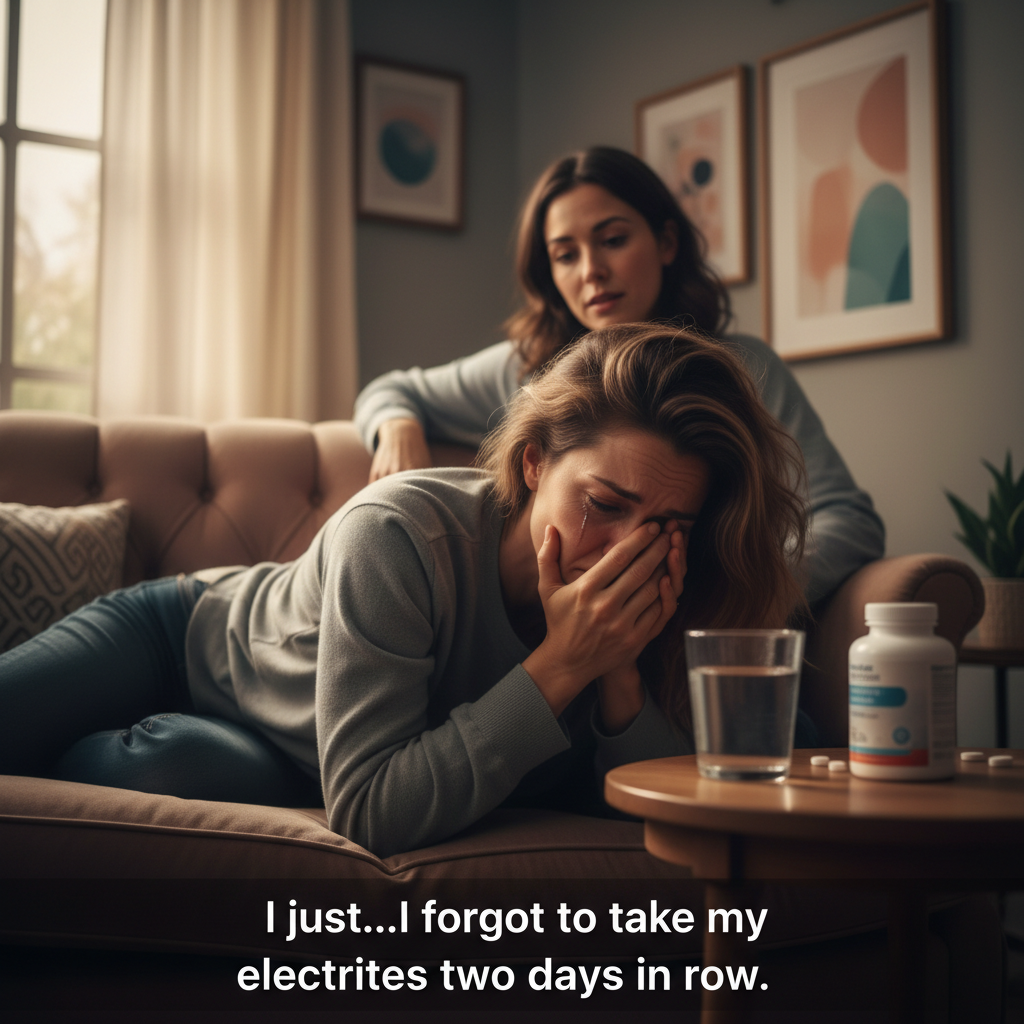
Brands that address that problem make it easier for consumers to get back on the horse. The service should be built around the customer's reality, not a fantasy version of themselves. And while many brands want to pretend every subscriber thrives, addressing these habit-breaking moments head-on takes the sting out of them.
There are three simple ways to do that:
Looking at subscriptions as a habit-forming system can be clarifying. Plenty of eCommerce products really don't make sense as subscription services. While it seems like a good way of driving repeat purchasing and recurring revenue, subscriptions can cause a lot of headaches.
If your product can't be habituated, churn will be high and logistics will be a nightmare. Constantly adjusting order volume easily leads to excess product and even delivery delays. The problem is often not fair-weather customers but a lack of real subscription-market fit.
But there's an important silver lining here: tons of products don't seem to fit the habit-building model, but actually could with the right strategy. If consumers love what you offer, the missing step is just figuring out how it fits into their lives.
The only rule is your rationale for launching a subscription can't just be "F-It, Why Not?"





.svg)