September 16, 2026
Fifteen years ago, giving a handful of YouTube-famous creators half your ad budget would have looked like insanity to a prospective investor. Today, not using creator content would raise the eyebrows of most VCs.
The Institute of Practitioners in Advertising (IPA) reports that influencer campaigns outperform other marketing channels over the long term. BCG claims influencers are the top channel through which consumers discover new brands and products. That all makes influencer marketing seem like a safe bet for scaling D2C brands.
But what happens when that ROI argument stunts brands’ growth potential?
Because D2C brands rarely scale without making a few decisions that look like lunacy on paper. And most influencer marketing campaigns no longer fit the bill.

Once influencer marketing becomes an accepted channel, it becomes an optimisable channel. Marketers start turning influencer marketing into a science, pinpointing the right micro-influencers to drive higher and higher ROI. Yet those incremental gains carry a significant opportunity cost.
Rather than leading customers, you chase them. Optimising the channel almost invariably means understanding what your audience already believes, the content it already consumes, and products it already knows it wants.
This is usually “data-driven”, making it catnip for most D2C founders:
If you’re working with influencers, agencies and networks typically share detailed (though not always reliable) intelligence about their audience size, demographics, and expected conversion rates.
If you are an influencer, you likely get plenty of analytics about engagement and audience demographics, along with an almost harrowing volume of comments telling you what the audience does and doesn’t like.
That leaves very little space for unexpected ideas or novel experiences. When you can evaluate ROAS ahead of time, any extra spend looks like waste. So anything that isn’t easily quantifiable, or lacks historical data to vet its likely ROI, becomes suspect, potentially negligent.
The problem is that safe content is almost never noteworthy. Unboxing videos deliver reliable results; they also make anybody who shares the video with their friends look like they haven’t been on the internet in a decade.
According to the IPA’s research, influencer ROI correlates far less with optimisation factors than other channels. Traditional media channels tend to scale with spend; if you increase your ad budget, the channel performs better. Influencer campaigns don’t follow that trend, instead hinging on the brand-influencer match and the creative quality.
For content to spread, the audience needs to gain status by sharing it. And that almost always means taking risks and adding costs that look like inexplicable errors on a spreadsheet.
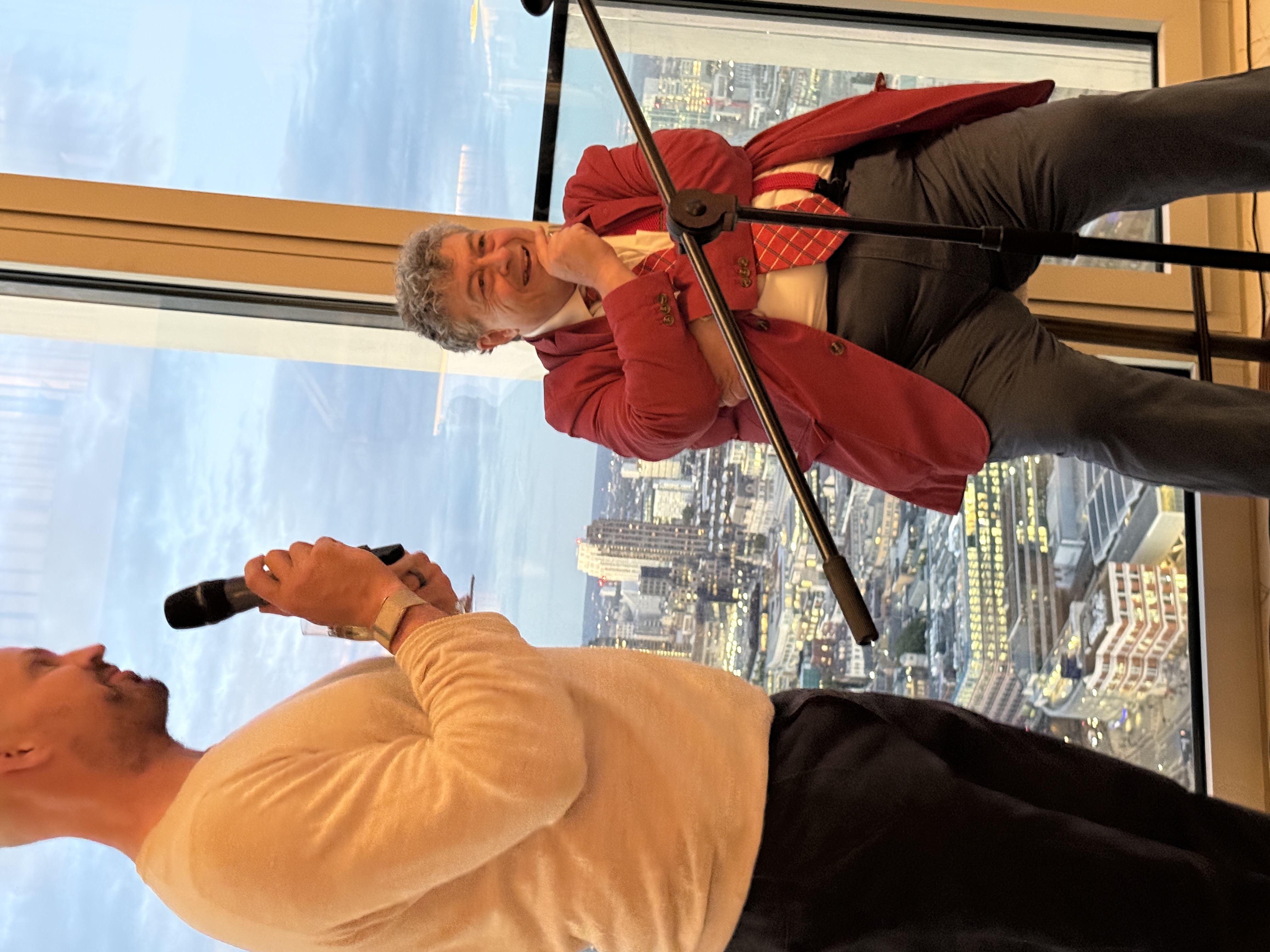
James Watt and Georgia Toffolo recently invited us to a private event at their apartment on London's Southbank to promote their new brand advocacy platform, Social Tip. There are two ways to tell the story of the evening.
First, through the lens of an ROI optimiser: the couple wasted a lot of time and money setting up a Scalextric set and hiring a world-class cocktail bartender. They had Rory Sutherland speak, which can’t have come cheap. And they didn’t appear to track the immediate ROI of any of it.
This version would appear like a parable about how feckless well-funded founders can be with money. Just imagine watching the facial contortions of your accountant upon finding the word “Scalextric” on your balance sheet.
But the very article you’re reading illustrates the second version of the story, which is that every person at the event had an experience they were desperate to share. Canapés and racing cars might not strictly speaking relate to influencer marketing, but they created an experience that turned every attendee into a micro-influencer.
That shows the limitations of exclusively ROI-focused marketing. Social Tip sells a service that promises concrete, quantified outcomes. Yet when promoting that service, they still saw the value in arguably wasteful, somewhat inexplicable trimmings that created an experience no spreadsheet could evaluate.
There’s a lesson for every D2C founder there. Rather than harvesting creators’ audiences to purchase reach, the event showed how influencer marketing could become a jumping-off point to generate UGC and word of mouth that go far beyond the standard ad-based metrics most influencer content is measured by.
Achieving that goal will force founders to rethink how they approach influencer campaigns.
Founders often use influencer marketing simply because there’s a clear path to execution. You might have an agency already; you might have direct connections with the right influencers. The channel seems attractive in part because you know ahead of time how much it’ll cost and how you’ll pull it off.
But that approach swaps ease for effectiveness. The most reliable way to create experiences that your audience wants to share is to start with a simple question: what does your audience not realise they want?
Importantly, this is not just about scouring Google Trends or existing content performance stats to find popular formats. It’s about using empathy and creativity to arrive at unexpected, idiosyncratic desires that none of your competitors would think of or dare try.
One way in is to ask what your audience misses, rather than wants. Plenty of sports brands run running clubs; not many run a primary school-style sports day. That taps into nostalgia and gives the audience something genuinely worth talking about.
Of course, not every brand has the bandwidth or budget to take big swings like this. Reliable ROI is important when a single dud campaign could mean missing your sales targets and putting your business in jeopardy. But for those that can afford to push the boundaries, this route offers far greater potential rewards.
Because getting what you wanted is satisfying; getting what you didn’t know you wanted is share-worthy. Had the Social Tip team asked every attendee to list what they’d like to get from the evening, it seems unlikely anyone would’ve asked to lose at a toy racing car game.


The simple answer is: yes, but it depends heavily on strategy and execution. IPA research also suggests influencer ROI is less tied to optimisation than other channels. It depends far more on the brand–influencer match and creative quality.
Many brands try to solve that problem by aggressively optimising their influencer campaigns. But that often involves a trade-off where higher ROI comes at the cost of less cultural impact and word of mouth.
Optimisation pushes brands to chase what audiences already believe, consume and want, guided by audience data and predicted ROAS. Anything without historical data to justify its ROI starts to look like waste, so unexpected ideas get squeezed out.
The result is safe content, and safe content is rarely noteworthy. IPA research also suggests influencer ROI is less tied to optimisation than other channels. It depends far more on the brand–influencer match and creative quality.
Start by asking what your audience doesn't realise it wants. Answer that with empathy and creativity rather than trend data or past performance stats. One useful angle is to ask what your audience misses.
For example, a sports brand could run a primary school-style sports day instead of another running club. Bold swings aren't right for every brand, especially when one failed campaign could threaten sales targets. For those that can afford the risk, though, the potential rewards are far greater.





.svg)