September 7, 2026
You can tell how successful your D2C brand is by how boring your biggest questions are.
When you start, it’s all about how to bring your products to life or build a brand on TikTok. Once you hit 50 daily orders, you start running out of space in your parents’ attic to store products and spend your evenings asking ChatGPT: “What’s a third-party logistics provider?”
The problem is you really cannot afford to put those slightly tedious supply chain questions off. Ofcom's 2025 research found that 68% of UK shoppers hit a problem with a parcel delivery in the last six months, with 78% of consumers telling another survey that they were not likely to make a repeat purchase from a brand after a below-par experience.
Learning about logistics might not make you a hit at parties, but it will protect all the hard work you put into building products and a brand that’s actually starting to take off.
So we brought together James Kouhry (CEO of Zendbox and serial founder) and Jordan Blackwell (Head of Supply Chain at Zendbox) to explore how D2C founders can use a third-party logistics provider (3PL) to scale their brand without friction.
One obvious but important disclosure: Zendbox is a 3PL and we undeniably have skin in the game. But we haven’t loaded the dice here; we’re offering an honest take on the subject that founders can use to make better logistics decisions, even if it means going with another partner.
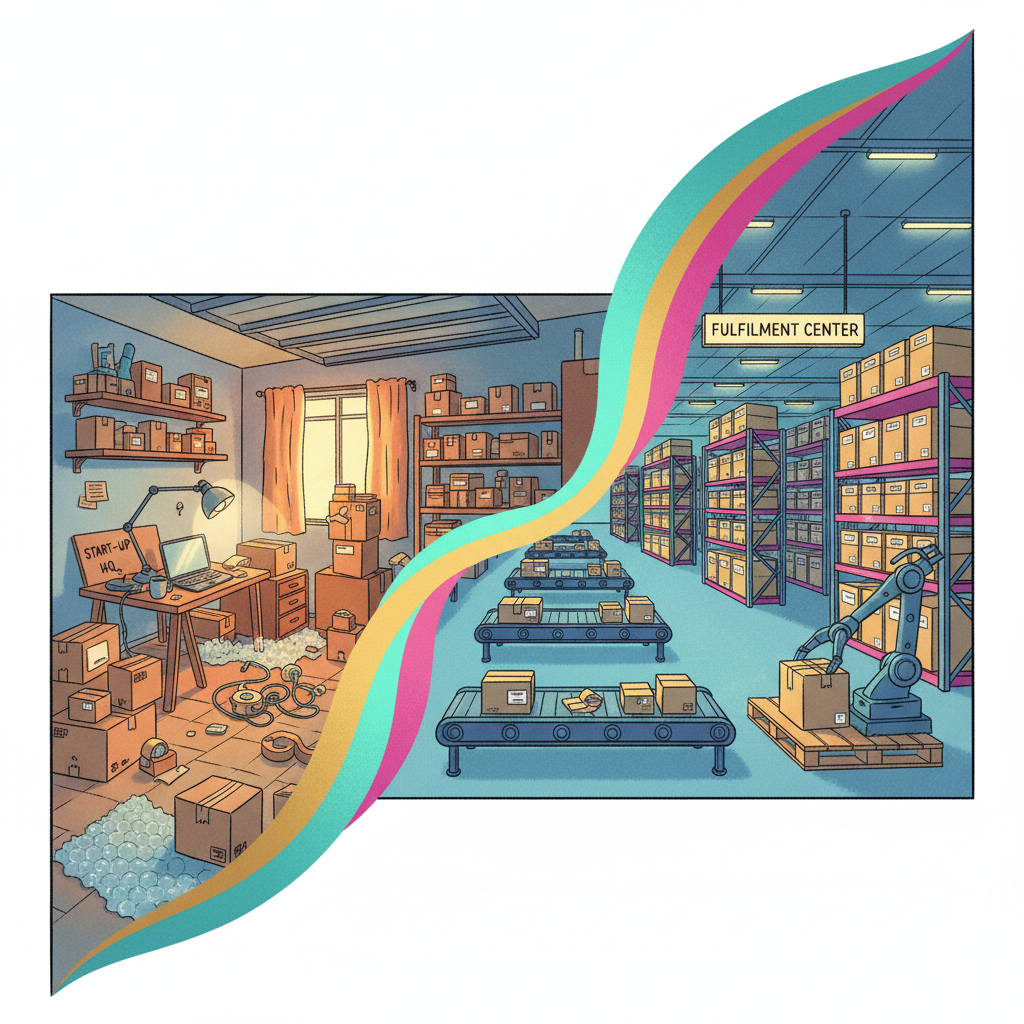
Very early-stage founders often manage logistics for themselves. Products get stored in their flats, sometimes even at their parents’ or friends’ places. The founder oversees the orders coming in, prints the shipping labels, takes them to the post office, and handles all the returns rigamarole.
That do-it-yourself vibe has some benefits, Jordan says. “You can feel when care has gone into packing and shipping a product,” he explains. “Founders often leave little handwritten notes or gifts in the package, which makes the customer feel special and want to support the brand more.”
This would be termed “first-party logistics” (1PL): the brand owns its own warehousing (if we can call it that), packing, and shipping. There’s a direct line from customers to logistics, which can make it easier to fix orders, as well as meaning the only real costs are courier charges, packaging, and whatever you feel your time is worth.
But James argues that 1PL should really be a short-term necessity, not a long-term solution. “That approach can be quite exciting for a bit,” he says. “But the novelty wears off fast, especially when things ramp up quickly. You often end up missing order deadlines, potentially having to offer refunds or reject orders because there just isn’t time or space to get them delivered.”
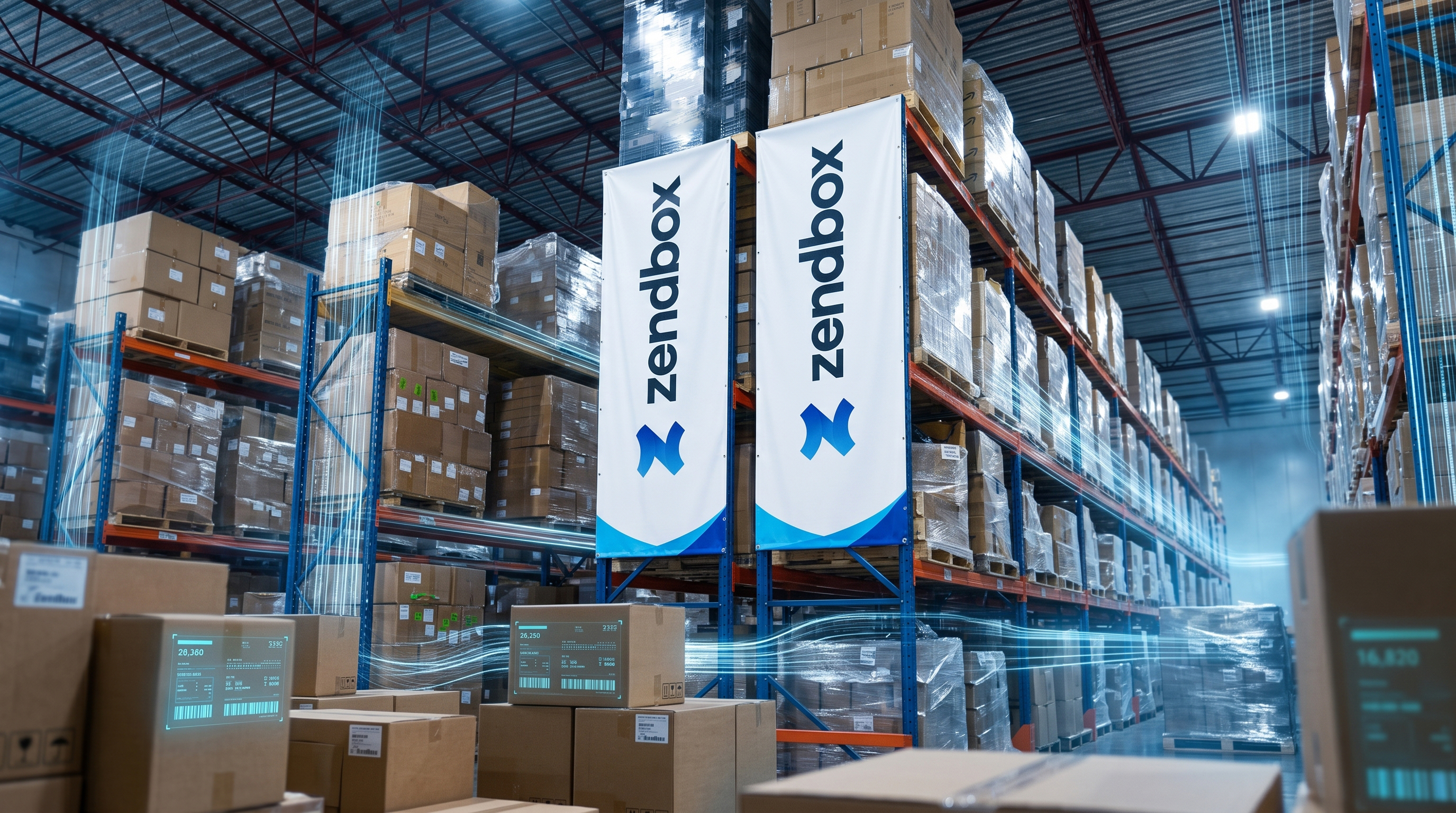
That leads founders to outsource these processes via a third-party logistics (3PL) provider. A 3PL offers comprehensive, end-to-end services, including warehousing, picking, packing, and transportation; they essentially take over the entire logistics process.
To get the full scale of what a 3PL can provide, consider this grid:
| Service | What it is | What it means for you |
|---|---|---|
| Goods-in and QC | Stock counted, checked and booked in on arrival | Supplier errors caught before customers find them |
| Storage | Racked, tracked space charged by what you use | No lease, no spare room, no dead capital |
| Pick and pack | Orders picked, packed and dispatched daily | Your evenings back, and volume you can scale |
| Branded packaging | Custom boxes, tissue, inserts and cards | The unboxing stays yours at 500 orders a day |
| Carrier management | Rates shopped across Royal Mail, Evri, DPD and others | Postage rates you could not negotiate alone |
| Late cut-offs | Same-day dispatch on orders placed into the evening | A next-day promise you can put on the product page |
| Returns | Inspected, graded, restocked or written off | Sellable stock back on the shelf in days, not weeks |
| International and customs | VAT, IOSS, DDP and GB to EU paperwork handled | Sell into Europe without becoming a customs expert |
| Integrations | Shopify, Amazon, TikTok Shop and marketplaces synced | Orders flow through with no manual entry |
| Live visibility | Stock levels and order status in one dashboard | Answer “where is my order” without emailing anyone |
| Kitting and bundles | Multi-item sets, gift boxes and subscription builds | Launch a bundle or a box without hiring |
| B2B and wholesale | Pallets, EDI and retailer compliance labelling | One partner when a retailer finally says yes |
Despite many internet articles and LinkedIn “thought leadership” to the contrary, there are no hard-and-fast rules about when a 3PL becomes beneficial for D2C brands.
“The founder guru-verse is filled with hyper-specific guidelines that lose a lot of nuance,” James says. “You don’t have to work with a 3PL when you hit 300 monthly orders. You also don’t have to wait until you hit that number before there are benefits.”
James and Jordan agree that there are several reasons you might decide to keep things in-house, too:
Jordan suggests founders approach the question from a cost-benefit perspective. While 3PLs use different pricing systems, most charge based on a per-item basis, along with certain value-added services. That means you can project the cost of working with a 3PL and compare it to the potential value of having your time and space back.
“There are hidden costs to think about,” James says. “Some providers make their service definitions vague so they can charge for extra services. But if you trust the 3PL, the question is really: ‘will outsourcing logistics help me grow enough to offset the cost?’”
Another approach is to wait for specific triggers. James says there are many common factors that lead founders to start working with a 3PL:
| Trigger | What it sounds like | Check yourself first | Verdict |
|---|---|---|---|
| Fulfilment is damaging the brand | “Our reviews used to be exceptional, but the average has dropped because of delivery problems” | One bad week is not a pattern. Look at three months of delivery complaints, not last Tuesday’s refund | Move if delivery issues are recurring and traceable to your own capacity |
| You keep missing delivery deadlines | “I don’t have bandwidth to grow the brand because logistics takes up so much time and energy” | Count the hours honestly. If packing is under five hours a week, a temp hire is cheaper | Move if fulfilment is eating time you would otherwise spend on demand |
| Every promotion creates chaos | “Almost every drop is a logistics nightmare. Whatever we gain in sales is lost in reputation” | Is the problem volume, or planning? A forecast might fix it | Move if spikes are frequent and you cannot staff for them |
| You have run out of space | Stock in the spare room, the garage, a friend’s unit | Is this seasonal overflow or the new baseline? | Move if the overflow is permanent and self-storage is the alternative |
| Customers want something you cannot offer | “Customers keep asking for subscriptions and we know it’s where the market’s going” | Is the demand real or anecdotal? Check the actual requests | Move if the gap between what you want to offer and what you can deliver is clear and costing sales |
| Growth is outpacing your setup | Orders climbing faster than you can hire or expand | Choose on strategy, not on this month’s SKU count | Move before capacity caps you, not after |
If you encounter any of these triggers, a 3PL is likely to offer tangible benefits. But that raises another question:

“Most founders are a little torn about working with a 3PL,” Jordan says. “You get your time back and the service is far more consistent, but it’s easy to feel you’re also losing control.”
That fear is not always misplaced either, James points out. There have been some pretty high-profile scare stories about lost stock. So it’s not like outsourcing is just this simple solution to all your fulfillment problems; you need to be really careful who you work with.
“You see a lot of lists that cite a bunch of technical factors or specific services to look for,” Jordan says. “But that kind of ‘checklist’ approach is pretty limited. You need your 3PL to operate as an extension of your brand, which means they should really be evaluated more like an employee than a vendor.”
James says that’s really the key to choosing a partner. “You need a partner that’s really going to help you adapt over time, not just manage your warehouse,” he says. “Most of the big questions are really about the company’s values, not just their picking technology or warehouse management system.”
He recommends every D2C founder uses the following criteria to evaluate any prospective 3PL:
| Factor | What to look for | How to test it | Red flag |
|---|---|---|---|
| Basic compatibility | Can they store your product, deliver where your customers are, integrate with your platform, and meet your budget and timeline | Straight checklist. Ask before anything else | Any no here ends the conversation |
| Transparency | A clear breakdown of how products are stored, picked, packed and shipped | Ask to visit the warehouse. Ask to meet people beyond the salesperson | They will not show you the site, or you only ever meet one person |
| Pricing clarity | Clear pricing, detailed SLAs, stated delivery speed and accuracy, a process for when things go wrong | Ask for the full rate card including extras, and ask what happens when an SLA is missed | Vague pricing, or SLAs that exist in conversation but not in the contract |
| Transition timelines | A defined timeline, a fixed go-live date, and what is required from you at each stage | Ask them to walk you through their transition process step by step | No named process, or a timeline that shifts when you ask twice |
| Service consistency | Reliable delivery times, high order accuracy, proactive communication | Ask for accuracy figures and how they are measured | Numbers with no method behind them |
| Experience quality | The company operates as a unified whole from sales through to account management | Ask how information moves internally. Do you have to repeat yourself? | You explain your cold storage requirement three times to three people |
| Flexibility | Order spikes anticipated and staffed for, short-notice changes absorbed without chaos | Ask what they did last peak season, specifically | Peak is described as something that happens to them |
| Cultural alignment | Codified steps to understand your history, values and customers | Ask what their onboarding actually gathers | Nobody asks you a question about your brand |
| Customer experience | Specific examples of exceeding expectations for other partners | Ask for the example, then ask to speak to that client | Only general claims, no names |
| Scalability | A service offering that extends beyond basic fulfilment as you scale | Ask what happens when you double, and when you add a market | They can only describe what you need today |
Nobody builds a D2C brand hoping one day they’ll spend their evenings thinking about IOSS paperwork or warehouse visibility. And while those boring questions are important, the real benefit of working with a 3PL is you don’t have to answer them alone.





.svg)