September 25, 2026
You got a lifetime’s worth of ‘warehouse visibility’ when your products were stored, packed, and shipped from your flat. Chances are you outsourced logistics so you could stop thinking about stock levels and dispatch dates. But when you actually lose track of these things, their importance becomes clear very fast.
Complaints about products that were listed as in stock but unavailable. Missing stock that erodes your margins. Fulfilment delays that lose you customers.
These aren’t scare stories propagated by Big Warehouse; they’re almost inevitable outcomes when any brand making 50+ daily orders doesn’t have real-time data about their inventory.

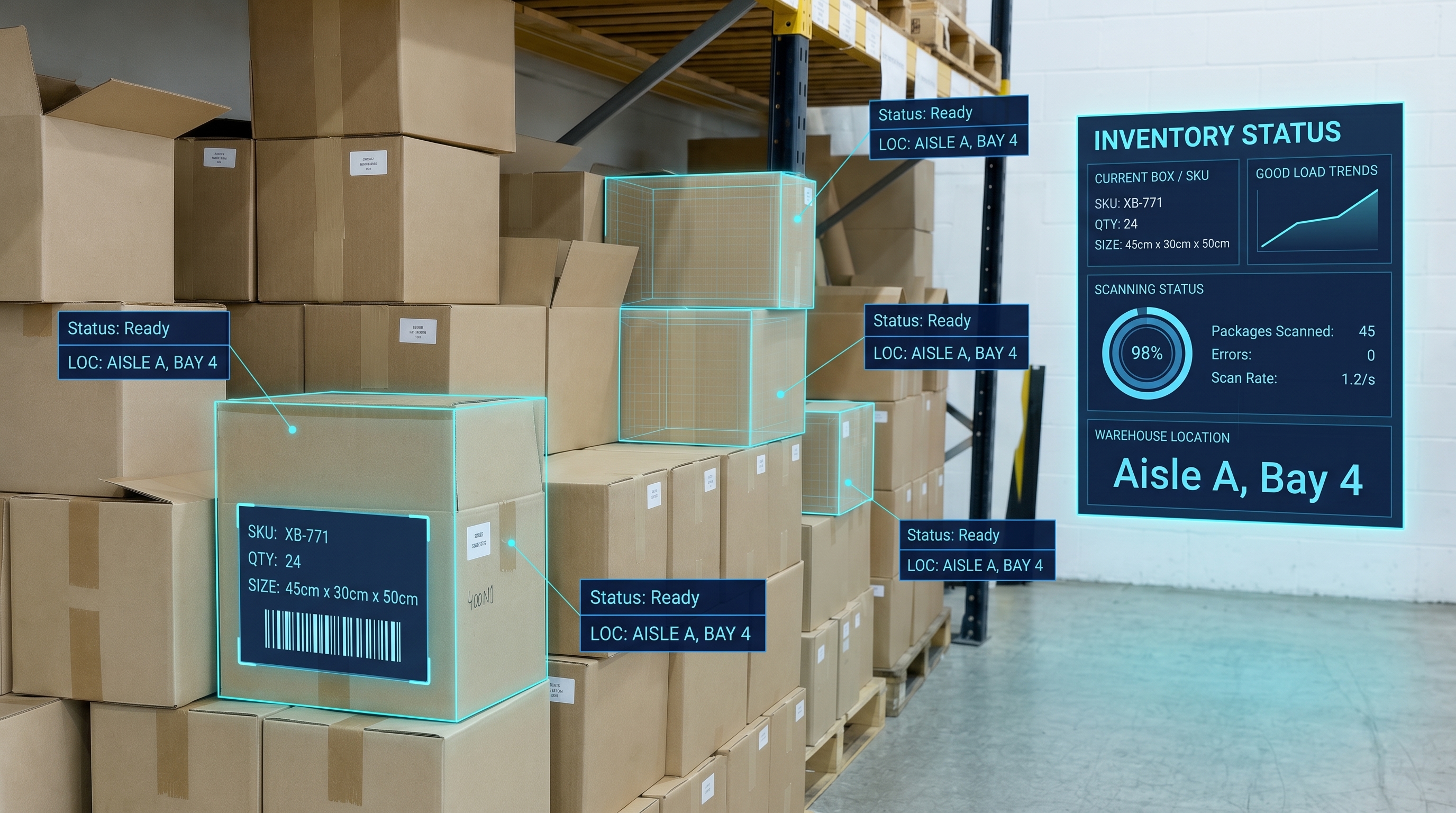
Warehouse visibility is a catch-all term for the ability to track and monitor all activity within a warehouse or fulfilment centre. That includes stock levels and location; order progress; and staff behaviour.
Everything that happens within a warehouse affects everything else. Staffing rotas and workflows influence how many packages get picked, packed, and shipped within a given time frame. Stock and data influence how many staff are needed at any given time.
If your goal is to optimise the volume, speed, and accuracy of the combined output of the warehouse, you need a single view of all these factors. However, not all ‘warehouse visibility’ is the same.
Plenty of 3PLs boast about real-time visibility but define it quite narrowly. So you end up with lots of data, but no real way to create a clear picture of what’s really going on or the ability to actually change how the warehouse functions.
A common distinction is between transactional visibility (which essentially tracks the order at each stage of the supply chain) and operational visibility (which gives you real insight into how, when, and why specific events occur within the supply chain).
Transactional visibility is useful but limited. It’s the basis for things like accurate order tracking, which is really important for customers. But if you want to get ahead of problems and improve fulfilment, you need full, real-time operational visibility.

Let’s start from a purely logistical point of view: accurate, real-time data about warehouse activity helps optimise how each aspect of the warehouse operates. That means fewer picking errors, better coordination between staff, and faster, more consistent fulfilment.
It’s not that visibility in itself leads to these outcomes; it simply allows supply chain managers to identify friction and proactively manage how the warehouse works as a cohesive system.
Think of it like a mirror: it doesn’t make your hair look good, but it’s pretty hard to achieve that goal without one.
The speed and accuracy of fulfilment is a well-known benefit of visibility. But what is often overlooked is its role in creating a cohesive customer experience.
Almost everything comes down to expectations. Real-time visibility helps constantly set realistic expectations, so your brand avoids overpromising on delivery times or stock availability.
To demonstrate this point, let’s look at research into what happens when D2C brands do overpromise. A survey of over 1,000 customers found that nearly 40% stop buying from D2C brands because the company can’t keep up with demand. Cancelled or delayed orders were cited by over one-quarter of these customers, yet it’s important to think through the implication.
Being out-of-stock could easily signal a product is in high demand and drive up demand. The minute inventory goes to zero, a ‘wait list’ button could appear. The problem is when customers are allowed to expect an item to be available and it isn’t. That turns what should be a scarcity signal into a signal of unreliability.
Ultimately, we can segment the benefits of real-time visibility into two categories:
Stock counts are accurate: What the PDP shows is what your warehouse actually has ready to ship.
Expectations are met: Your order cut-offs are set based on live pick capacity, so products arrive when you claimed.
Products launch smoothly: New products and limited-edition drops appear based on real stock.
Order status is accurate: You get accurate updates to track order progress, which can be shared with customers to build confidence and improve customer experience.
Order errors are pre-empted: If errors ever do occur, you can identify, track, and report them before an angry email arrives.
Refunds are fast: You can manage reverse logistics just as confidently. As soon as a return is scanned, the refund is released.
The unfortunate reality for most founders is that visibility is relatively fixed. Your 3PL likely has some visibility, but if Reddit and Shopify forums are anything to go on, many don’t have nearly as much as they’d like.
Because visibility is a system-wide feature, 3PLs can’t easily retrofit it. If various tasks, like picking or staff rotas, are still not digitised, getting reliable data, especially real-time data, will be very difficult and the vendor will have big blind spots in its dashboards.
That’s why our team typically encourages founders to consider warehouse visibility before signing a 3PL contract. Equally, if you’re stuck with a partner that lacks visibility, you can switch to a more transparent vendor far faster and with greater ease than you might realise.
There are three basic questions to ask when speaking with potential partners:

This gets to the heart of the discrepancies between different vendors' ideas of ‘visibility’. Some offer a truly granular view of the product as it moves through each phase of the fulfilment process; others basically track stock levels, often at a relatively slow cadence.
Our Zendportal shows order state, stock position, and returns status in one view, including items currently in pick. That last point is crucial to keep product status accurate on your website, as it’s what most commonly causes products to appear in stock online even when the stock is depleted.
Many 3PLs quote impressive performance stats; at Zendbox, we’ve got 99.99% accuracy. But what founders should really look for is evidence of consistent real-time visibility through operational promises.
For example, our system enables next-day deliveries for orders made up to 9pm. That isn’t just a claim about the accuracy of picking; it’s a tangible service that we offer because we have an optimised system, built around comprehensive visibility.
The warehouse is just one part of the larger product and customer lifecycles. While most 3PLs deal exclusively with the fulfilment aspect, there is often scope to take visibility way beyond this.
First, our Inventory Analysis inside Zendportal turns the stock position into reorder timing and demand forecasts. That allows you to make informed decisions beyond existing orders and be proactive about manufacturing and other parts of the supply chain.
Second, we offer every founder the opportunity to view our warehouse for themselves. You can see how the facilities work and meet the people who will look after your products and customers.
Finally, we give our partners direct access, via WhatsApp, to the warehouse. If you have an urgent request or question, you don’t need to go through customer success or a sales person to speak with our supply chain team; you can simply reach out and get an answer fast.
That takes visibility beyond a dashboard and turns it into a value. And we find that, paradoxically, the more visibility of that kind our partners get, the less they feel the need to worry about dull dashboards.
Curious how our technology could give you more warehouse visibility?

Warehouse visibility is the ability to track and monitor everything happening inside a warehouse or fulfilment centre, from stock levels and locations to order progress and staff activity. That ability helps to reduce mistakes (such lost stock and picking errors) and increase the warehouse’s operational efficiency.
Once you're shipping 50+ orders a day, gaps in real-time data quickly turn into problems customers notice: products listed as in stock that aren't, missing stock eating into your margins, and delayed orders.
Real-time visibility lets you set realistic expectations on availability and delivery times so you don't overpromise. This is important because research suggests nearly 40% of customers stop buying from D2C brands that can't keep up with demand.
Visibility won't fix fulfilment on its own, but it lets your 3PL spot friction early and run the warehouse as one cohesive system.
Transactional visibility tracks an order as it moves through each stage of the supply chain. It powers accurate order tracking, which customers value, but it only tells you where something is, not why things happen.
Operational visibility goes deeper. It shows how, when and why specific events occur inside the warehouse, such as picking bottlenecks, staffing pressure or stock moving into pick. That's the level of insight you need to get ahead of problems rather than react to them.
Many 3PLs advertise "real-time visibility", but only really offer the transactional kind. That leaves you with plenty of data and no clear picture of what's actually going on. If you want fewer errors and faster, more consistent fulfilment, look for full, real-time operational visibility.
Not in a hands-on sense. Most founders outsource logistics so they can stop worrying about stock levels and dispatch dates. But handing over the work shouldn't mean losing sight of it.
You need reliable, real-time access to stock position, order status and returns, so your website stays accurate and you can make informed decisions about reordering and demand. Ideally, founders would be able to trust their warehouse to manage day-to-day, and only get involved when a strategic choice needs to be made.
A good 3PL makes that easy, with a single view of what matters, forecasting that turns stock data into reorder timing, and a direct line to the people running the warehouse when something urgent comes up. At Zendbox, we find that the more open and accessible a partner is, the less founders feel the need to watch dashboards at all.
Ideally, assess visibility before you sign. It's hard for a 3PL to retrofit visibility if tasks like picking or staff rotas aren't digitised.
Start with three questions:
How much of the warehouse’s activity is tracked? Look for a granular view of products through each stage of fulfilment, including items currently in pick, not just stock levels updated at a slow cadence.
Can they demonstrate the CX benefit of their WMS? Accuracy stats are useful, but operational promises, such as late next-day delivery cut-offs, show visibility working in practice.
How do they extend visibility beyond the warehouse? Look for demand forecasting, the chance to visit the site, and direct access to the operations team. If your current 3PL falls short, switching to a more transparent partner is often quicker and easier than you'd expect.





.svg)